
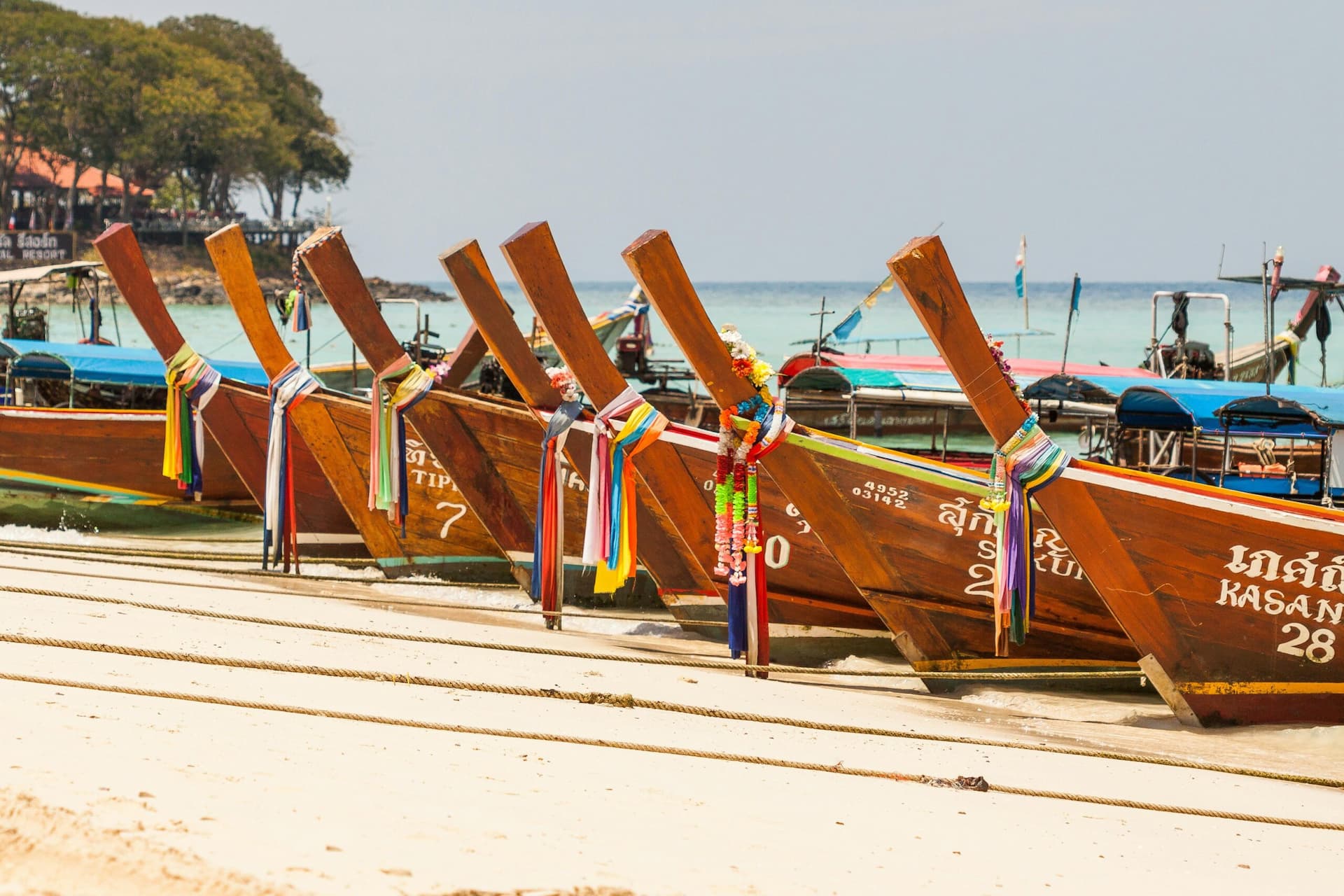
Retiring In Thailand: The Ultimate Guide To Visas, Costs And Best Places
Thailand has long attracted retirees, offering a hospitable climate, affordability, high healthcare standards, modern infrastructure, and multiple lifestyle options.
If you’re looking to move to Thailand for retirement, read on. This guide looks at the practical side of retiring in Thailand, covering visa options, living costs, and the places most commonly chosen by long-stay retirees.
Why Retire In Thailand?
While the lower cost of living in Thailand often catches attention first, the country attracts retirees for reasons that go well beyond affordability. In many cases, it’s the overall quality of daily life that persuades many people to stay, especially those who come from colder climates or countries with rising healthcare expenses.
Climate
Although it sometimes takes time to adapt, Thailand’s climate plays a major role in the country’s appeal. Warm weather allows daily life to extend beyond the home, with local markets, cafés, and walkable neighbourhoods forming part of a regular routine.
Healthcare
One of the strongest arguments in Thailand’s favour is its private healthcare system. International-standard hospitals operate in major cities and popular retirement areas, offering short waiting times and English-speaking medical staff.
Cost of living
Thailand allows retirees to shape their lifestyle according to their budget rather than the other way around. You may choose a modest apartment in a quieter town or go for a serviced residence in a city center or resort area. Food and everyday essentials don’t cost much, especially if you prefer local options over imported goods.
Established expat communities
There are expat communities in many regions of Thailand, which offer social groups and volunteer opportunities, and also provide informal assistance if you need advice on navigating local systems. They can help you make the transition smoother, particularly during the first year.
Pace of life
Many retirees describe Thailand as a place where daily pressures feel lighter. Expectations around time and productivity are often less rigid than in Western countries. Moving to Thailand gives you space to focus on health, hobbies, or simply enjoy a slower routine.
Thailand Retirement Visa Requirements
When it comes to a retirement visa, Thailand‘s immigration system offers several paths that allow retirees to live in the country legally for extended periods.
For immigration purposes, the retirement age in Thailand is generally considered to be 50, and all retirement visas are only available to applicants aged 50 or older.
Non-Immigrant O and O-A Visas
For most retirees, the starting point is the Non-Immigrant O section of Thailand’s visa system. This is often referred to simply as a retirement visa, though it comes in two forms that serve slightly different needs:
- Non-Immigrant O Visa is an initial long-stay visa that allows you to enter Thailand, usually for 90 days, with the intention of extending your stay. It can then be converted or extended into a longer-term permission to stay without leaving Thailand.
- Non-Immigrant O-A Visa is a long-stay retirement visa granted for one year at the outset. It is designed for people who want to arrive with a long-stay visa already in hand. It must be renewed every year.
To qualify for either the O or the O-A retirement visa, Thailand requires you to meet certain financial conditions. Typically, retirees must demonstrate one of the following:
- A bank deposit of at least 800,000 THB (around $25,000) held in a Thai bank account for at least two months before applying.
- A monthly income or pension of at least 65,000 THB (around $2,000), usually shown with proof from your embassy or a series of bank statements.
- Some applicants meet the financial requirement with a combination of savings and income that adds up to 800,000 THB (around $25,000) total.
Health insurance is usually required for the O-A visa, with minimum coverage thresholds specified by Thai Immigration. If you apply from outside Thailand, insurers must issue a policy valid for the full period of the visa.
Holders of a Non-Immigrant O or O-A visa must also check in with immigration officials every 90 days while in Thailand, even if their visa is still valid for a longer period.
Non-Immigrant O-X Visa
Non-Immigrant O-X visa is a longer option for retirees in certain countries, which allows stays of up to 5 years at a time and is renewable once for a total of 10 years.
This visa has higher financial thresholds than the standard retirement visa. For example, applicants may need significantly larger cash deposits or proof of higher annual income. In practice, the O-X category has been offered to citizens from a defined list of countries (including the U.S.) and often requires more extensive documentation, including a clean criminal record and substantial health insurance.
Long-Term Resident (LTR) Visa
The LTR visa is aimed at people who meet investment or asset thresholds that go beyond standard retirement visa criteria. It includes several eligibility categories, including the Wealthy Pensioner option for retirees. With an LTR visa, qualifying applicants may be able to live in Thailand for extended periods without the need for annual renewals.
Retirees in the Wealthy Pensioner category must be over 50 years old and either meet stated income levels or combine lower income with qualifying investments in Thailand. The specific criteria vary and are subject to separate rules set by Thailand’s Board of Investment. Before starting the process, it’s important to check the exact requirements on the LTR portal or with a qualified adviser.
Things to keep in mind
- If you enter Thailand on a tourist visa or visa-exempt entry, it is often possible to apply for a Non-Immigrant O visa inside the country, provided you meet the eligibility criteria. You can then manage a long-term stay via yearly extensions.
- Renewals require re-showing your financial proof and other documents, so be prepared to provide evidence that the pledged amount has remained in your account for a prescribed period before renewal.
- All these visas prohibit formal employment in Thailand. Engaging in paid work without the correct work permit can lead to fines, visa cancellation, and deportation.
Cost Of Living For Thailand Retirees
As already mentioned, the cost of living in Thailand is one of the major reasons this country remains attractive to retirees. While living costs are generally low, they depend on location, housing choices, and personal habits.
Housing
Accommodation is usually the largest expense, with rent varying widely. For example, a one-bedroom apartment in a city centre may run about $250-$1,120/month, depending on the city. Quieter provincial towns offer lower prices, while living in Bangkok or popular resort areas comes at a higher cost.
Long-term rentals are common, and landlords often offer better rates for six- or twelve-month agreements. Buying property in Thailand is more complex for foreigners, which is why many retirees continue to rent even after several years in the country.
Some people also consider retirement homes in Thailand. While they tend to cost more than standard rentals, the price often includes services that would otherwise be paid for separately.
Utilities and everyday services
Utility bills, including electricity, water, and internet, typically come to $50-$100/month, with electricity costs largely depending on air-conditioning use.
Mobile phone plans are surprisingly inexpensive: basic prepaid plans with data and voice/text start around $1.50-$5, while larger data packages often fall in the $6-$15 range.
Domestic services, such as cleaning or laundry, are also relatively affordable and are often part of daily life.
Food and groceries
Food costs vary depending on how often you eat out and whether you buy local or imported foods. Street food and local markets can make meals very affordable (street meals as low as $2-$5 each, groceries around $150/month), while Western-style dining and imported products raise the monthly total.
Transportation
While fuel costs are lower than in many Western countries (about $0.90-$1.35 per litre), getting around Thailand does not usually require owning a car. Public transport and taxis are reasonably priced ($30-$100 per month for typical use), and many people use bikes or scooters for short-distance travel.
Healthcare and insurance
Spending on healthcare in Thailand varies depending on insurance coverage and personal health needs. Routine consultations and minor procedures are often affordable when paid out of pocket, especially at private clinics. Larger hospitals and international facilities charge more, but costs are still competitive compared to many countries.
Lifestyle choices
While daily life in Thailand can be inexpensive, habits such as imported alcohol, international schooling, frequent travel, and Western-style housing add to monthly costs considerably. Overall, costs can range from $850 to $2,600 or more, depending on your lifestyle.
Best Places To Retire In Thailand
When it comes to choosing the best place to live in Thailand, the country offers versatile options. Climate, healthcare access, community size, and daily pace vary from one region to another. Let’s explore the most common choices.
Chiang Mai
Set in the north of the country, Chiang Mai appeals to retirees who value a slower rhythm and cooler seasonal temperatures. The city has a long-established expat population, a good selection of private hospitals, and living costs that remain lower than in coastal resort areas. The city and surrounding areas are widely regarded as one of the main hubs for retirement homes in Thailand, from independent-living communities to assisted-living options.
Bangkok
Bangkok offers convenience that is hard to match elsewhere in Thailand. With a wide range of housing options, the city is a go-to choice for people who prefer an urban environment, while international hospitals make it particularly appealing to retirees with ongoing healthcare needs. Bangkok also boasts reliable public transport and easy-to-access services.
Pattaya
One of the busiest tourist destinations, Pattaya is also one of the most popular spots for retiring in Thailand. Strong medical facilities, affordable long-term housing, beach access, and proximity to Bangkok all add to its appeal.
Hua Hin
Hua Hin has long been popular with retirees looking for a balance between coastal living and practicality. While it’s calmer than Thailand’s major resort towns, Hua Hin still offers modern healthcare facilities and a thriving expat community. Housing costs are usually somewhere between provincial towns and large cities, and the town’s layout makes it easy to navigate without a car.
Phuket
Phuket attracts retirees who prioritise beach access and an international lifestyle. The island offers high-quality private hospitals, international dining, and well-developed infrastructure. Costs are higher than in most inland areas, especially for housing.
Smaller towns
Beyond the well-known destinations, places such as Krabi, Chiang Rai, and Udon Thani are attracting retirees who want lower living costs and a more local atmosphere. These areas tend to have smaller expat communities and fewer international amenities, but they let you fully immerse yourself in Thailand culture.
Conclusion
Thailand continues to stand out as a retirement destination because it offers choice. The country allows retirees to adjust their lifestyle to suit their budget and select locations that match their pace of life.
Understanding visa requirements and setting realistic expectations about costs can help you avoid challenges and make your expat life in Thailand more rewarding.